
A True Story from Home
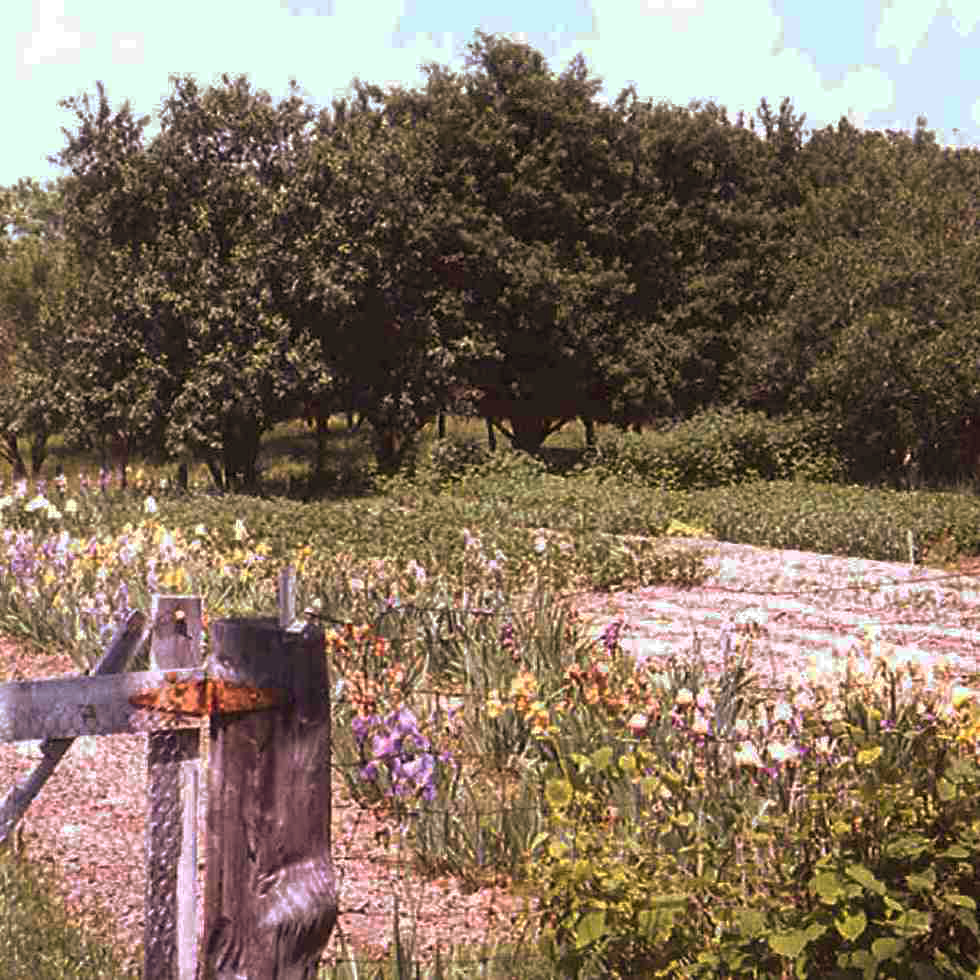
To me, Mrs. Olave Thurston was the lady in my grandpa’s stories—as if she was another Ma Ingalls or Miss Rumphius. When we ate chicken for dinner, Papa would tell how Mrs. Thurston raised, butchered, and boiled her own. When spring came and I cut fresh flowers for the table, they’d remind Papa of the lovely iris gardens Mrs. Thurston grew.
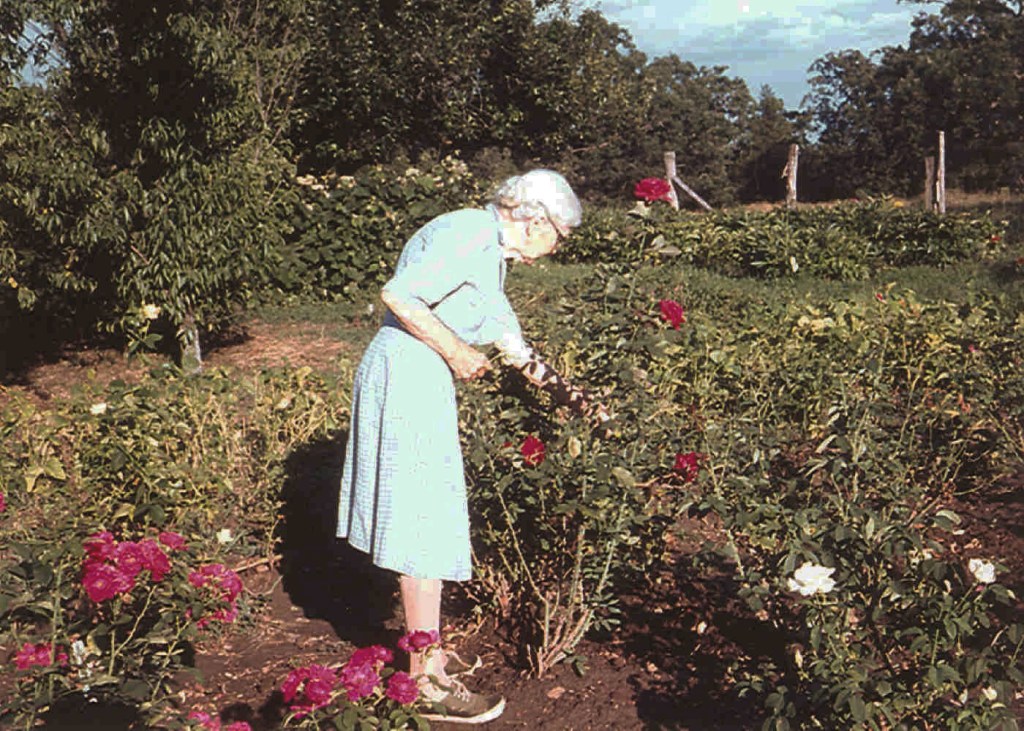
Her garden had been an acre in size, he said, and she plowed it all by hand. This was 1963. She was 80 years old and weighed ninety pounds, but the hands on the plow were as big as a man’s. They had to be. Mrs. Thurston’s husband had died ten years before and left her the farm. She didn’t sell it or rent it, but shouldered his work and kept the place running with the lovely touch of a woman—with flowers in the yard and preserves in the cellar.
Papa’s favorite story was about the oak tree. Mrs. Thurston’s nephews had chopped it down for her, then cut it into fat sections. When Papa came by just a week later, Mrs. Thurston had already split all the wood with an ax herself, hauled it, and stacked it in her sheds to burn in winter.
Growing up, these stories were served to me over many meals, one spoonful at a time; and one evening, Papa brought a special helping with him—a scrapbook he’d made of Mrs. Thurston’s life. There she was, out in her garden, wearing a checked dress and bonnet. Papa thumbed through the pages with the same awe he told the stories—as if this lady was a storybook hero whom he wanted to be like.
I started to feel that way too.
Who was she? I wondered, living Ma Ingalls’ way of life, and like Miss Rumphius, making her corner of the world more beautiful? Why was it that my grandpa couldn’t seem to forget her?
They had met at Bethlehem Baptist Church outside Harrisburg, Missouri. Papa Larry had been a student pastor there for just a few years, but in that time, he and my Grandma Karen had warmed to little Mrs. Thurston. And she liked them—so much that she hosted them on her farm over the weekends. Her home stood at the end of a two-track dirt road through five gates that Mrs. Thurston had to open each time she walked to the mailbox. Papa remembers how cold her farmhouse was in winter. It didn’t seem to bother Mrs. Thurston, but she’d kindly heat a brick for Papa to tuck under his quilt at night.
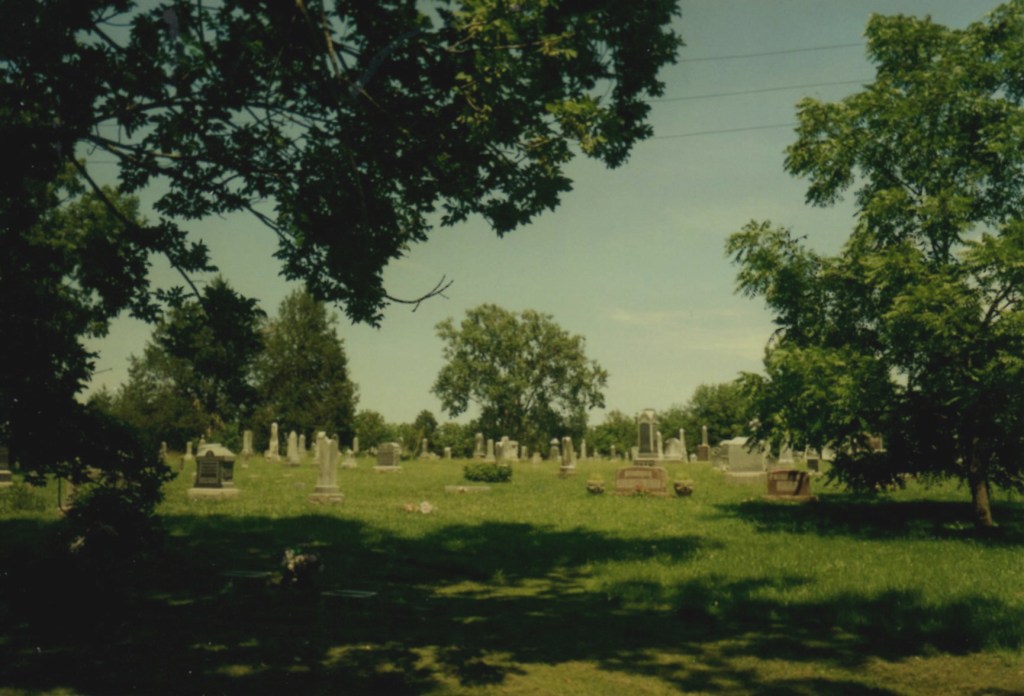
Maybe it was her love for gardening that made Mrs. Thurston the perfect caretaker of the church cemetery. Every Sunday after services, she’d walk the graveyard out back, picking up branches that littered the lawn. She’d replace fading flowers with fresh ones. And if some well-meaning person had placed fake, plastic flowers on a grave—well, they just didn’t belong.
One night, Papa told a story about Mrs. Thurston and the graveyard that I couldn’t forget.
When she had first started caretaking the cemetery, it had been crumbling and forgotten. The gravestones were old and unmarked, many broken into pieces that littered the grass. But broken or not, a gravestone marked some saint’s resting place, and in Mrs. Thurston’s eyes, one couldn’t just be unceremoniously hauled to the landfill.
The graveyard kneeled in a grove behind Bethlehem Baptist Church, and just beyond the last tombstones was a grassy gully. So Mrs. Thurston hauled every last bit of rock to the edge of the cemetery and slid them into the gully, where no one would be unsettled to find Aunt Margie May’s headstone in the Harrisburg City Dump.
Papa Larry laughs when he tells the story, but at the time, life on the farm and in the church was often heavy.
After leafing through the scrapbook of Mrs. Thurston’s pictures, I began to read her letters. Papa left the pastorate and the church after only a few years, but he and my grandma continued exchanging letters with Mrs. Thurston, who would tell them about the daffodils in bloom, or the pies she’d prepared, or the snows that came. More often, she wrote about the folks who’d died at Bethlehem—and there were many. In fact, there were more congregants buried in Mrs. Thurston’s cemetery than sitting in the pews on Sunday.
One winter, a young man named Elmer Fred died. His family was poor, so instead of hiring out, Papa kindly dug the grave himself. A grave was required to be seven feet deep. It was mid-February, and the ground was iron. Papa went home from the task weary and sore, but when he came back to the site a few weeks later, it was no longer a slab of hard dirt. Instead, a beautiful headstone rested there, with the simple name engraved:
Elmer Fred Moenning, Jr.
(1944-1964)
Papa knew it had been a quiet gift from Mrs. Thurston, the keeper of the cemetery who saw the young man as worthy of remembering.
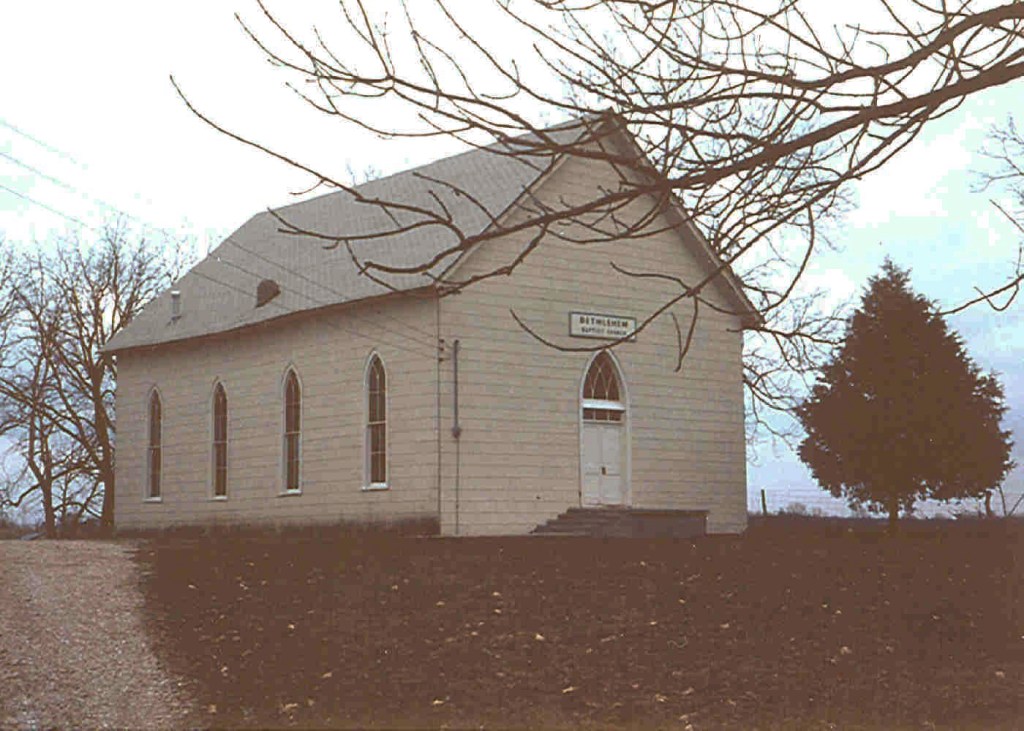
That winter, the old church building itself seemed to sag beneath a heaviness. As pastor, Papa Larry decided to partition off some space for a Sunday School classroom; but could the old floors support a 12-foot, freestanding wall? Papa was concerned the building’s foundation was too weak. They’d need to haul in additional rock to shore up the foundation from below, but where would a poor country church garner that much material?
Papa posed the problem to Mrs. Thurston and was surprised when she immediately had a solution. He listened as Mrs. Thurston told how she’d hidden a load of broken tombstones behind the cemetery, and wouldn’t they make a perfect material to shore up the building’s foundation?
Papa lumbered wheelbarrows full of stones from the gully back to the crawl space of the church, and when he’d finished, Mrs. Thurston boarded up the opening, satisfied that the stones were being used to build the Lord’s house.
It was a morning in early spring when a relative of Mrs. Thurston’s looked across her pasture to see smoke pluming from the chimney. They hurried to her farmhouse to find Mrs. Thurston in bed from a raging fever. She died later that day, leaving iris in the garden, cows in the pasture, and preserves in the cellar. Among the swaying grasses surrounding the mown cemetery, she left fresh flowers on the graves of other saints who’d gone before her.
But now that it was her turn, who would remember to tend her grave with fresh daffodils in spring?
Ten years passed. My grandparents moved to Sedalia, Missouri, where Papa served on the police force and Nanny as a nurse at the hospital. They had exchanged letters with Mrs. Thurston ever since they’d left Bethlehem, and up to the very end.
One day, Papa and Nanny made the two-hour-long drive to Harrisburg to see the old church again. It had been torn down, the site reclaimed by the Historic Society. Papa and Nanny got out of the car and walked around anyway. As he was stepping over the cracked dirt where the old building once stood, Papa noticed something rough under him. He looked down to see pieces of stone jutting up from the clay soil—gravestones. And they weren’t the only ones. In a grove behind a few big trees slept the Bethlehem Baptist Cemetery, which, to Papa’s surprise, was as tidy as it had been when Mrs. Thurston was alive. Papa later learned that Mrs. Thurston had endowed the cemetery so someone would always be paid to tend it.
In one of her letters, Mrs. Thurston had told my grandparents about a celebration the church ladies once held in her honor.
“I didn’t much like the publicity,” she wrote, “I hadn’t done anything to be praised by men. I was just a servant of Christ.”
Little Mrs. Thurston had lived much like a gravestone flower herself—quiet, honorable, then fading away on a March morning wind. Were it not for the letters she wrote or the stories Papa remembers, she’d have slipped into obscurity, like the precious gravestones in the gully.
Instead, Mrs. Thurston’s work on earth served as the quiet bedrock that shored up the Lord’s church. Her care was like the fresh flowers still adorning the cemetery. Ten years later, Papa could still see them rooted there in the earth, making it beautiful. And now forty years later, he’s still telling the story.
 bethanyjlincks.com
I loved remembering Mrs.Thurston through your story! I got to visit her several times and played the piano while Larry preached at the church. I even spent the night upstairs in her little house. She was so kind to me, and such an amazing woman! I still treasure a book she gave me of women’s fashions in the early 1900’s! I will have to bring it to show you next time I come❤️
LikeLiked by 1 person
that is amazing! i love how she gave away books, too. i would love to see that. ❤
LikeLike